
How to Get Your Website, Marketing, and Software Ready for Q1
Get your website, marketing and software ready before January. Work backward from when you need them in use and decide what to finish first.
8 min read
Founder & CEO at Upforge
Ramsey Deal is the founder and CEO of Upforge, a web and software development company in Cincinnati, and of Sonor, the AI platform that powers every Upforge build. Since 2017, Upforge has shipped more than 150 projects: marketing sites built to rank and to be cited by AI search, web and mobile applications, and the operational software that keeps a business running. Ramsey is also CMO at Manhattan Development Group (mdg.one), a land development company in Northern Kentucky. Before founding the company, he trained in the U.S. Navy's nuclear power program. Nuclear school is all systems, thousands of small things that have to hold, and that way of thinking still shapes how he builds software today.

Get your website, marketing and software ready before January. Work backward from when you need them in use and decide what to finish first.
8 min read
UsableNet counted 360 web accessibility suits in September 2026, and 91 of the businesses sued had a widget running. There's no federal ADA deadline for business websites, so fix the code, keep the audit, and talk to your lawyer.
7 min read
Since Oct. 1, Google bills Local Services Ads calls nobody answers once the caller waits past 20 seconds, voicemail included. We think the winners will run their ads only when someone picks up. What's billed, what the move to Google Ads changes, and a 10-minute check.
7 min read
Direct checkout inside Google AI Mode, Gemini, Meta and Microsoft Copilot is on by default for eligible Shopify stores, and Google Analytics doesn't see those orders. Decide channel by channel before Black Friday.
7 min read
Chrome's HTTPS prompt began rolling out with Chrome 154 on desktop (Sept. 22) and, per ChromeStatus, Chrome 155 on Android (Oct. 6, 2026). Our scan of 146 domains found every homepage fine and every miss on a side door.
7 min read
On October 1, Google told site owners to fact-check AI content by hand and called fake author profiles deception. We think invented personas are what Google catches next. Here's a 10-minute check of your blog's bylines.
7 min read
TechCred's October 2026 round closes at 3 p.m. Oct. 30. The new rules reimburse up to $1,000 per employee credential for hands-on tech skills, and concept-only AI courses won't qualify. Here's who's eligible, which AI credentials are on the list and a 10-minute check.
7 min read
Leverage means an outsized result from what you put in. Find the gap worth closing, size the fix against it, and stop when the payoff runs out. AI changes the price of acting on that judgment- not which improvements matter.
15 min read
Our view: small businesses should start owning their core software now. The 2025 tax change for software development is one reason, and here are the questions to bring your accountant before Dec. 31.
7 min read
A1 Garage Door Service is reportedly selling to KKR for about $2 billion, roughly 20 times earnings, in a trade where small shops sell for 2 to 6 times. The difference is an office that runs on AI.
8 min read
Microsoft stops sending text and voice sign-in codes for most work and school accounts on February 1, 2027. We think the phone number is done as a sign-in key, and we'd move your whole office to passkeys this fall, admins first.
7 min read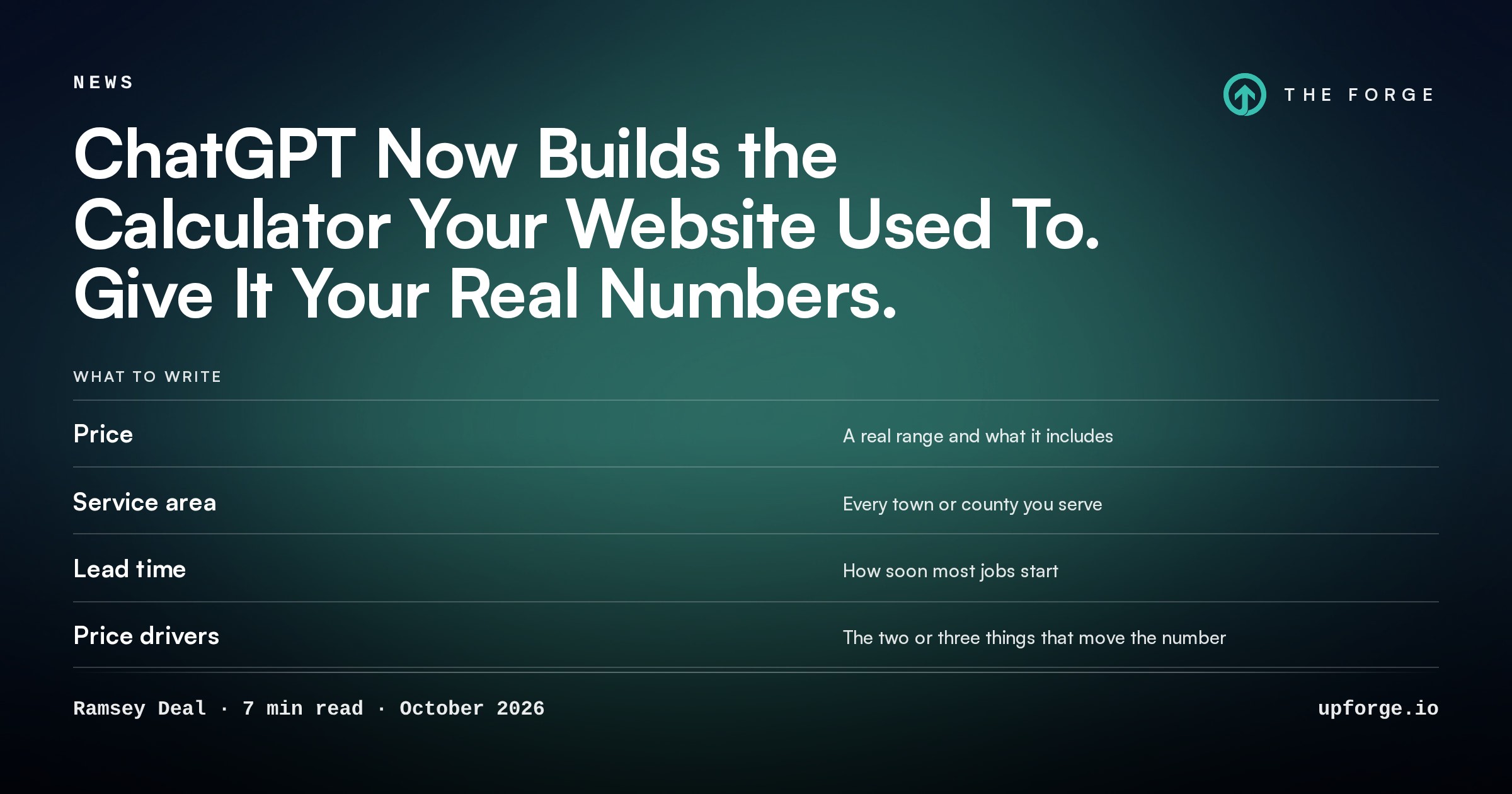
GPT-6 and Intelligent UI began rolling out in ChatGPT's everyday Chat tab on Oct 7, 2026, so a cost question can come back as a comparison or a working estimator. A generated calculator still needs local prices, and we expect it to name the businesses that publish them in plain text.
7 min read
We think the Google Business Profile is becoming the script Google's AI reads about your business, and Google's new four-day rule for suggested edits is the latest sign. What changed in September, and the weekly check we'd run.
8 min read
UpGuard found 16,326 Supabase databases with tables anyone could read. We think vibe-coded apps will soon have to prove their data is locked, and we show how to check yours this week.
7 min read
Next.js shipped eight security fixes in eight days, and two more are coming. We moved all 130 Next.js sites we run the day after the latest release. Here's how to check yours.
6 min read
AI assistants are about to start filing quote and booking requests. Amazon blocked Meta's Muse, but a local business shouldn't. What's coming, and how to let agents in safely.
8 min read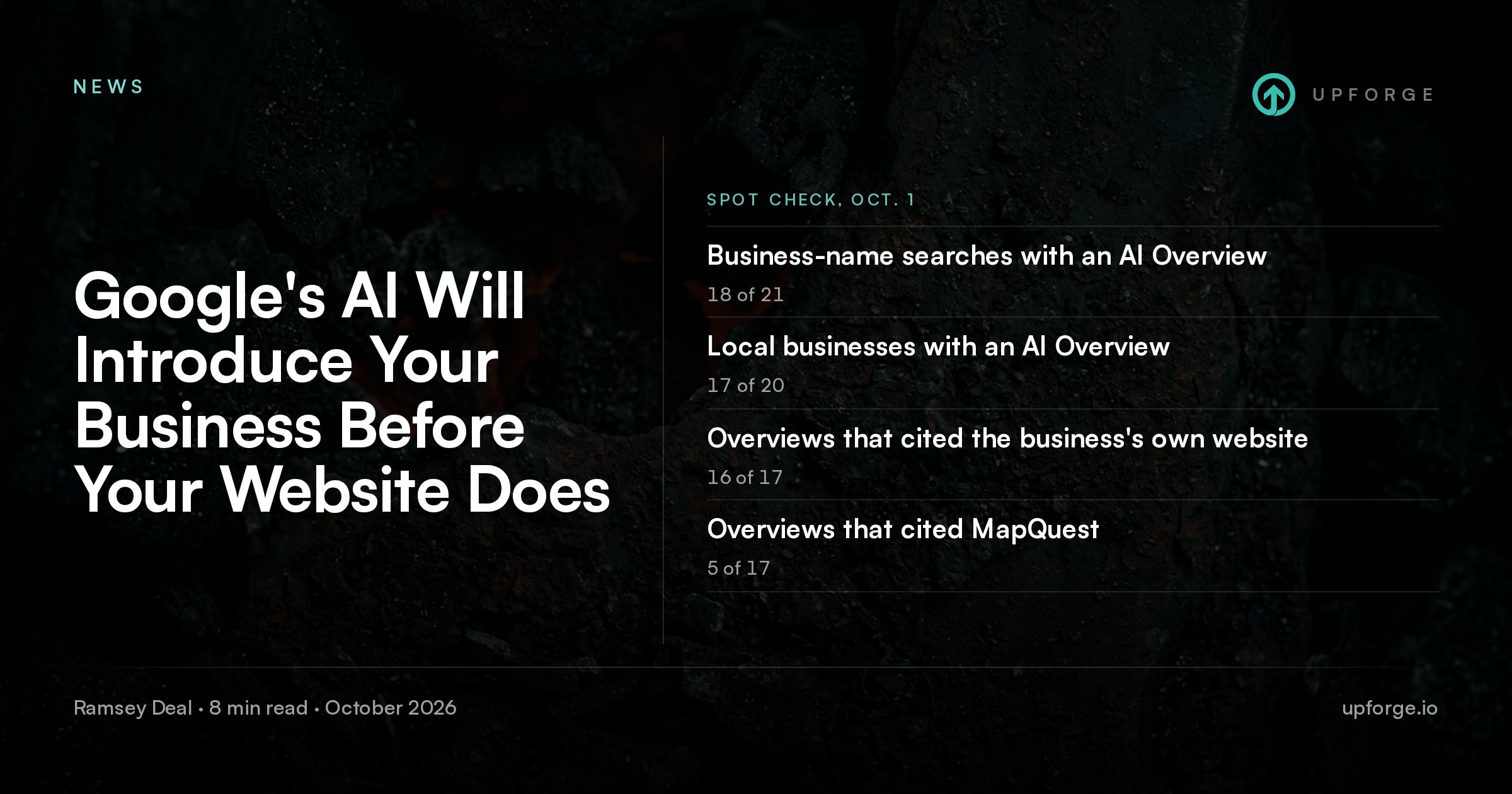
Google's AI now introduces most businesses before their own websites do. We searched 20 Cincinnati-area business names and 17 got an AI Overview. Where this goes next, and what to fix now.
8 min read
Home service owners spend hours a week moving the same information between apps, and homeowners want a real price tonight. An MCP server fixes both: run your day by message, and let a homeowner's assistant find, price and book you.
12 min read
Property managers spend hours pushing the same update into system after system, and prospects spend days chasing answers. An MCP server fixes both: tell your own assistant to change a price and it's live, and let a prospect's assistant find, verify and apply for them.
10 min read
AI tools build convincing screens fast. What they skip is what customers depend on: saved data, real logins, working payments and pages search engines and AI assistants can read. Here's how to check yours, and how we fix and launch it.
20 min read
How do you find and reduce JavaScript that delays real user interactions?
10 min read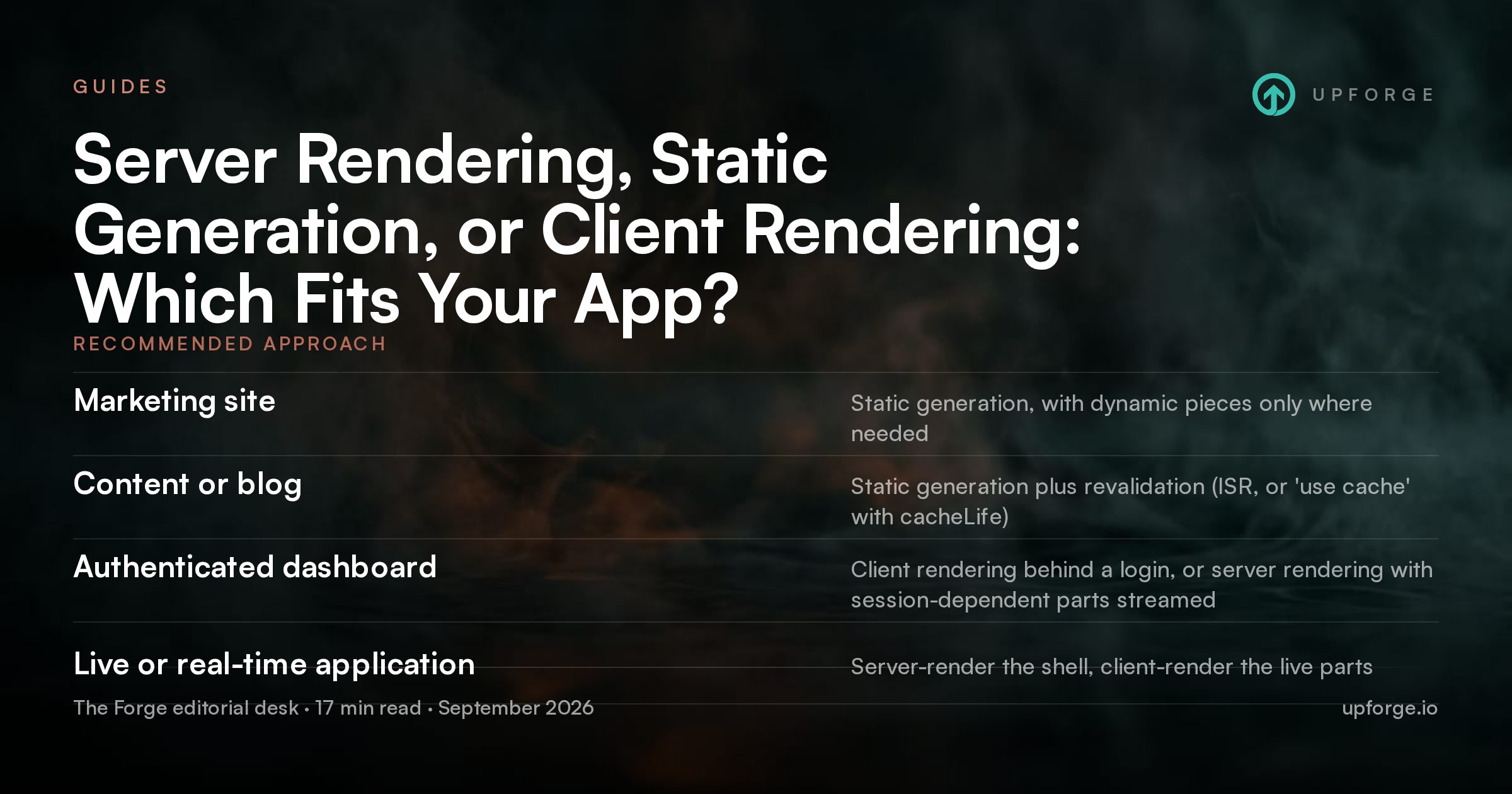
Static for marketing pages, server rendering for per-request data, client rendering behind a login, and both for live apps. We built one page three ways in Next.js 16.3.4 and caught a 'static' page rendering in the browser.
22 min read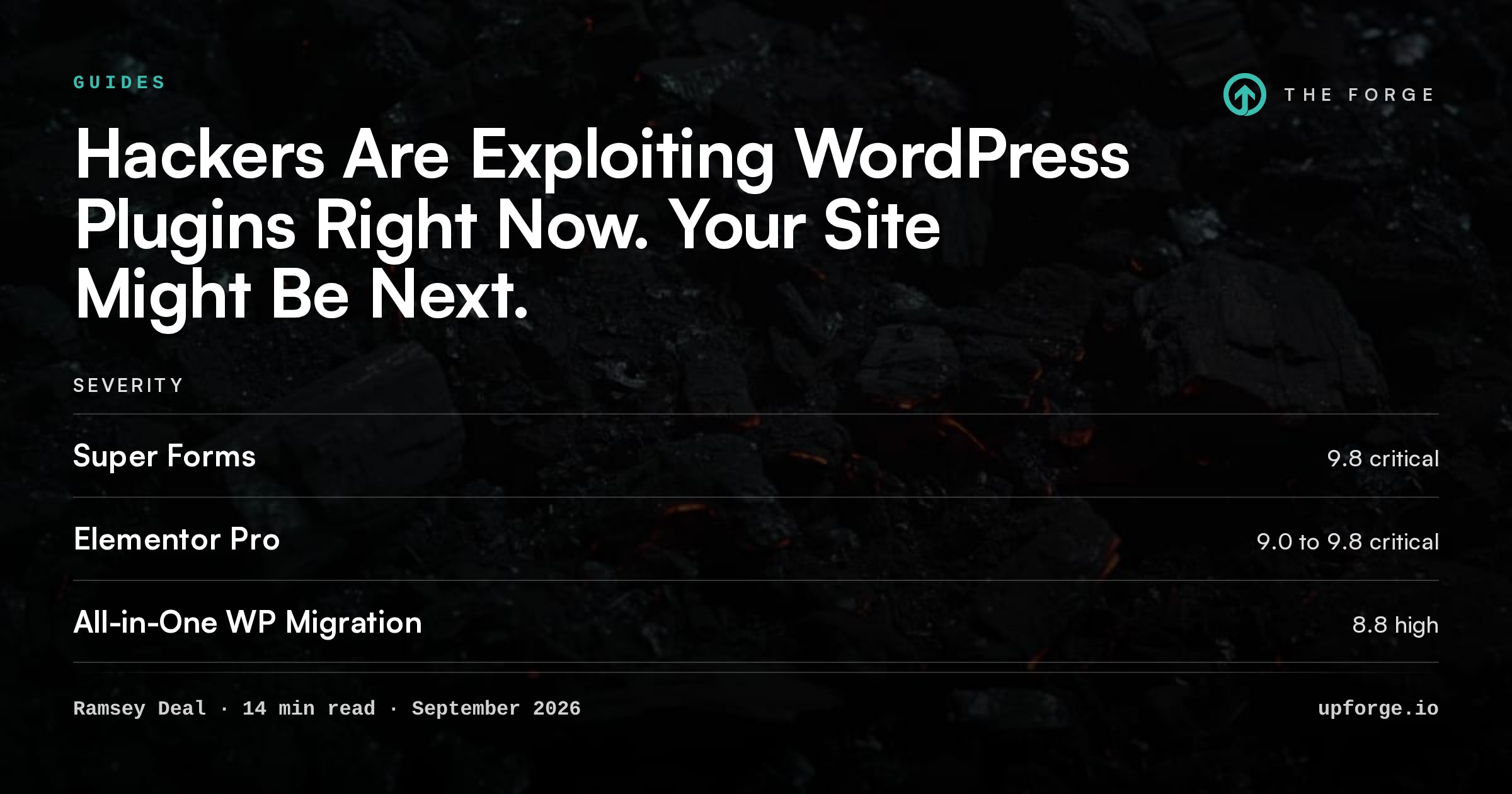
Super Forms, Elementor Pro and All-in-One WP Migration each shipped a remote code execution fix this summer, and Wordfence reports two under active attack. What happened, with primary sources, and why every plugin is a dependency you don't control.
14 min read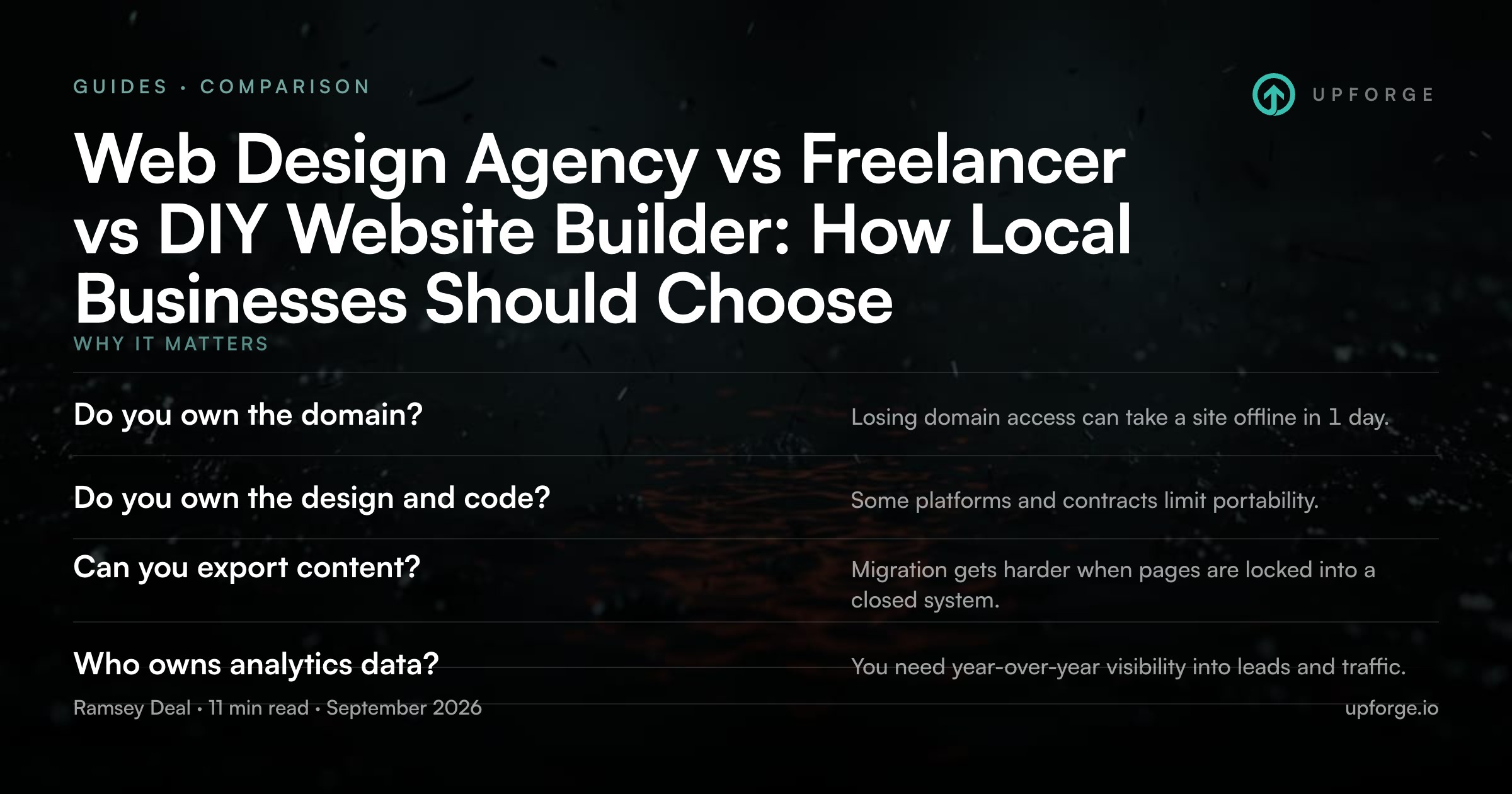
Local businesses should choose DIY for low-stakes 3 to 5 page sites, freelancers for defined one-off builds, and agencies when SEO, conversions, integrations, or post-launch accountability affect revenue.
15 min read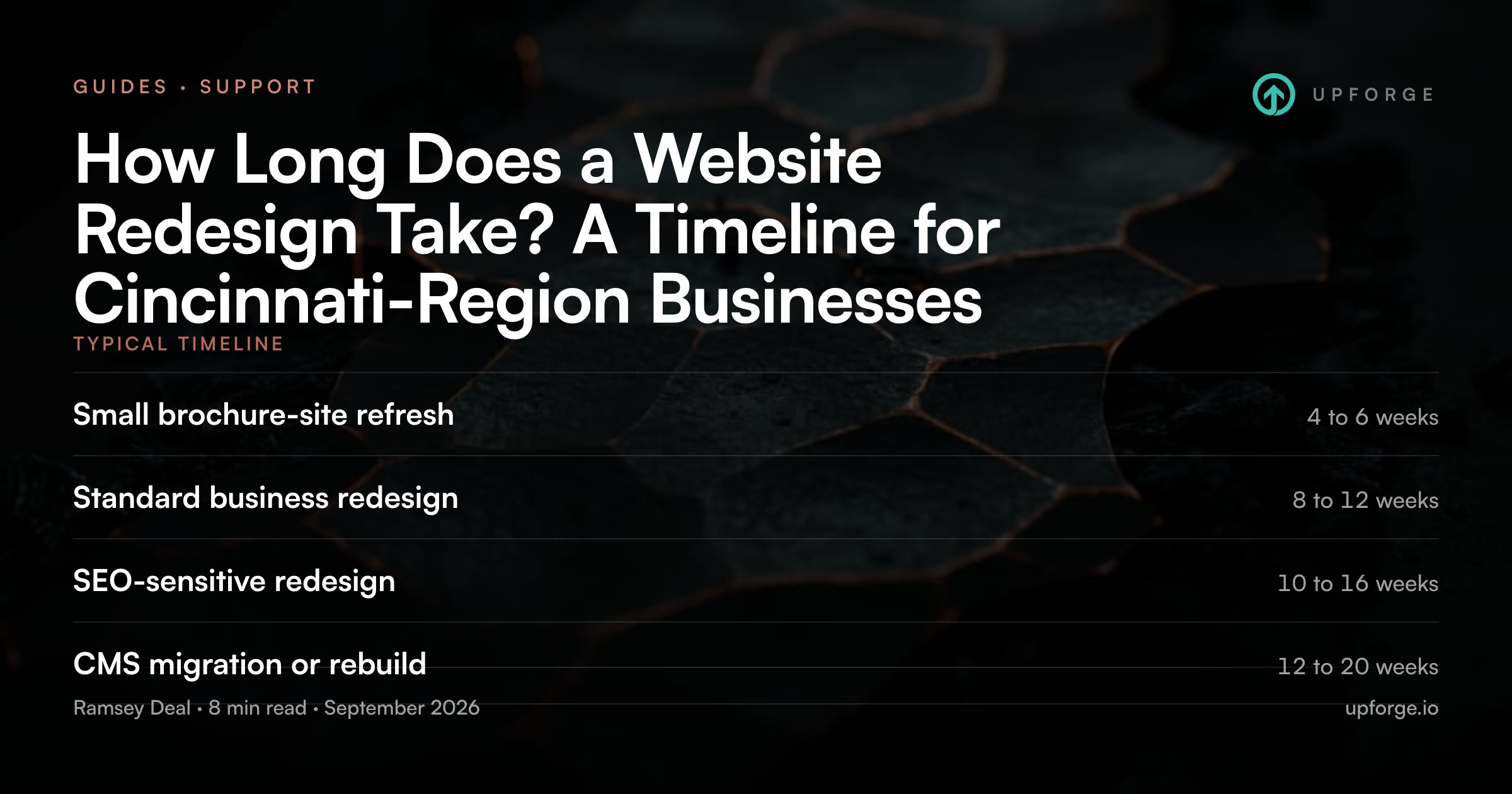
Most Cincinnati-region business website redesigns take 2 to 8 weeks and run $4,000 to $15,000, with CMS migrations, SEO preservation, and multi-location builds landing at the long end of both. Timeline risk is driven mainly by content readiness, stakeholder approvals, scope, and launch QA.
13 min read
Cincinnati-region businesses should choose a web design partner using 5 core criteria: strategy, SEO, speed, conversion tracking, and post-launch accountability. Most website redesigns cost $4,000 to $15,000 and take 2 to 8 weeks from audit to launch. Custom applications and platforms are budgeted separately and take longer.
22 min read
This website audit checklist helps businesses review 7 baseline metrics, 5 core page types, and key SEO, mobile, speed, accessibility, content, and CMS risks before starting a redesign.
14 min read
Rebuilding an existing site in the Cincinnati region runs $4,000 to $15,000 and takes 2 to 8 weeks, with SEO migration, analytics, CMS work, and performance optimization driving where you land in that range. Custom applications and platforms are quoted separately.
17 min read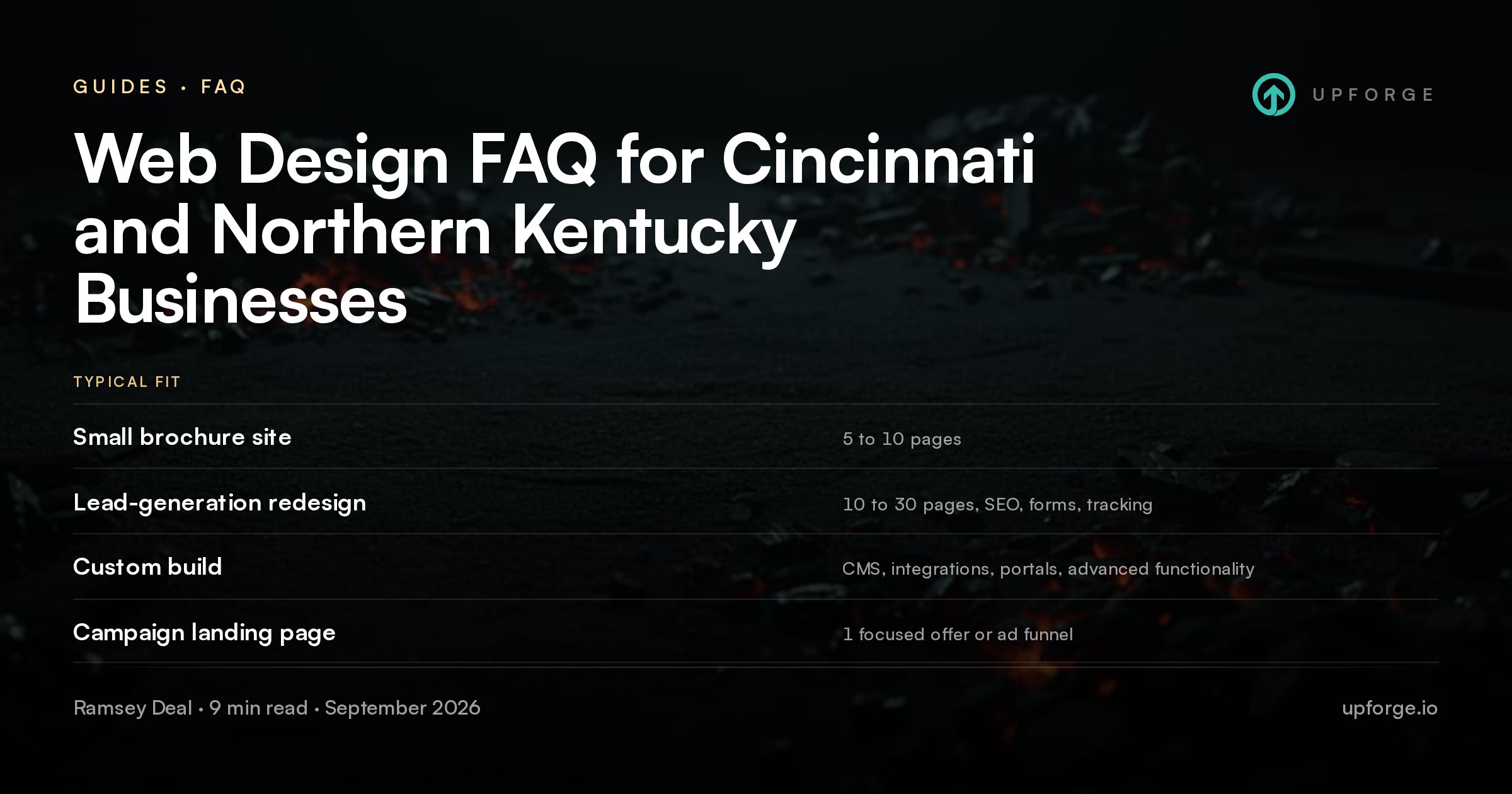
Planning a new website? Get clear answers on cost, timelines, ownership, and protecting your search visibility before choosing a developer.
9 min read
This article explains how Cincinnati-region businesses can improve local SEO and lead quality by aligning website architecture, service-area pages, Core Web Vitals, and conversion paths. It notes that Google's good Core Web Vitals thresholds include LCP under 2.5 seconds, INP under 200 milliseconds, and CLS under 0.1.
15 min read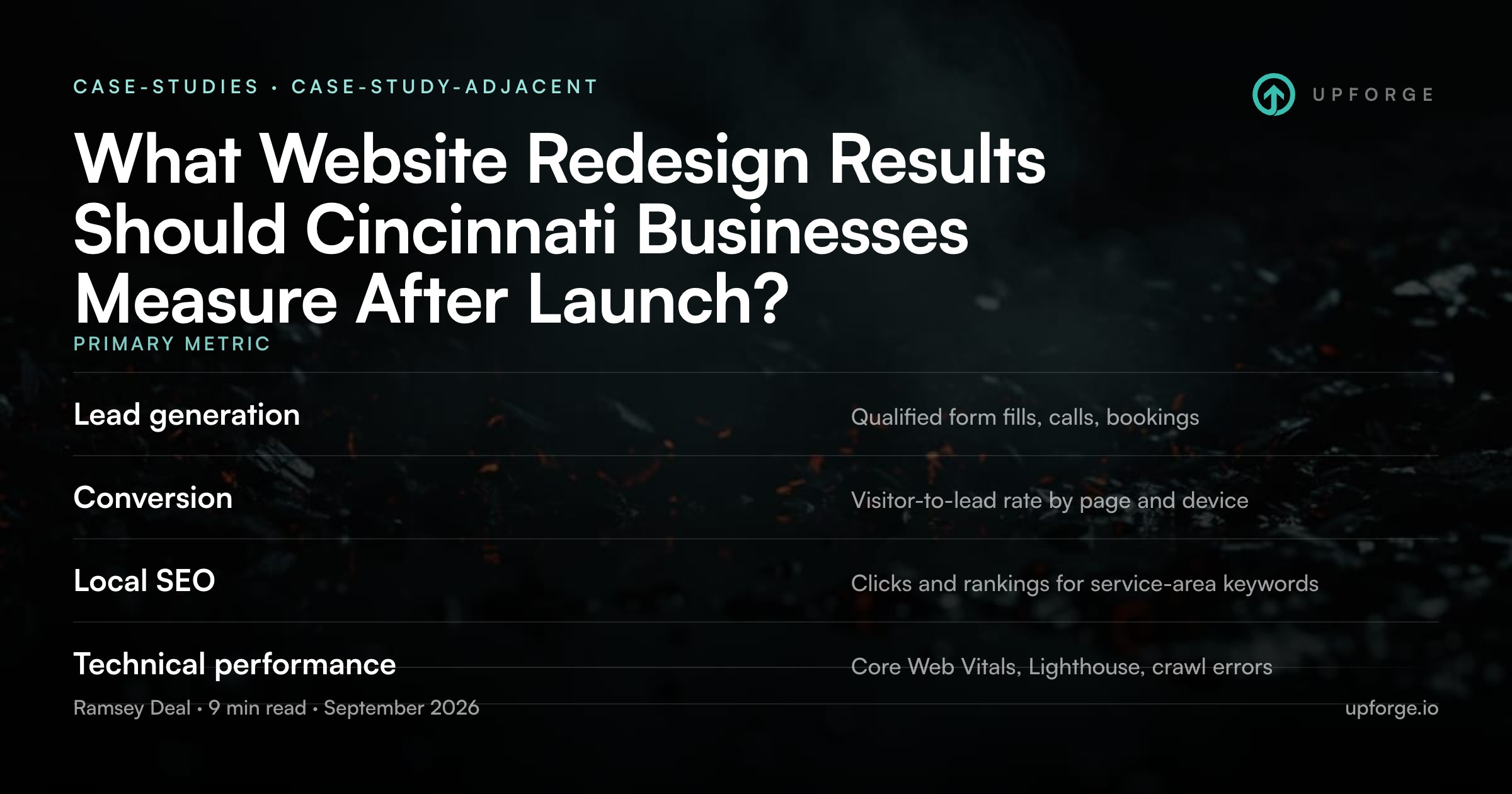
Cincinnati businesses should judge website redesign results over 30, 60, and 90 days using qualified leads, conversion rate, local SEO visibility, Core Web Vitals, and revenue impact. Google defines good Core Web Vitals as LCP at or below 2.5 seconds, INP at or below 200 milliseconds, and CLS at or below 0.1.
13 min read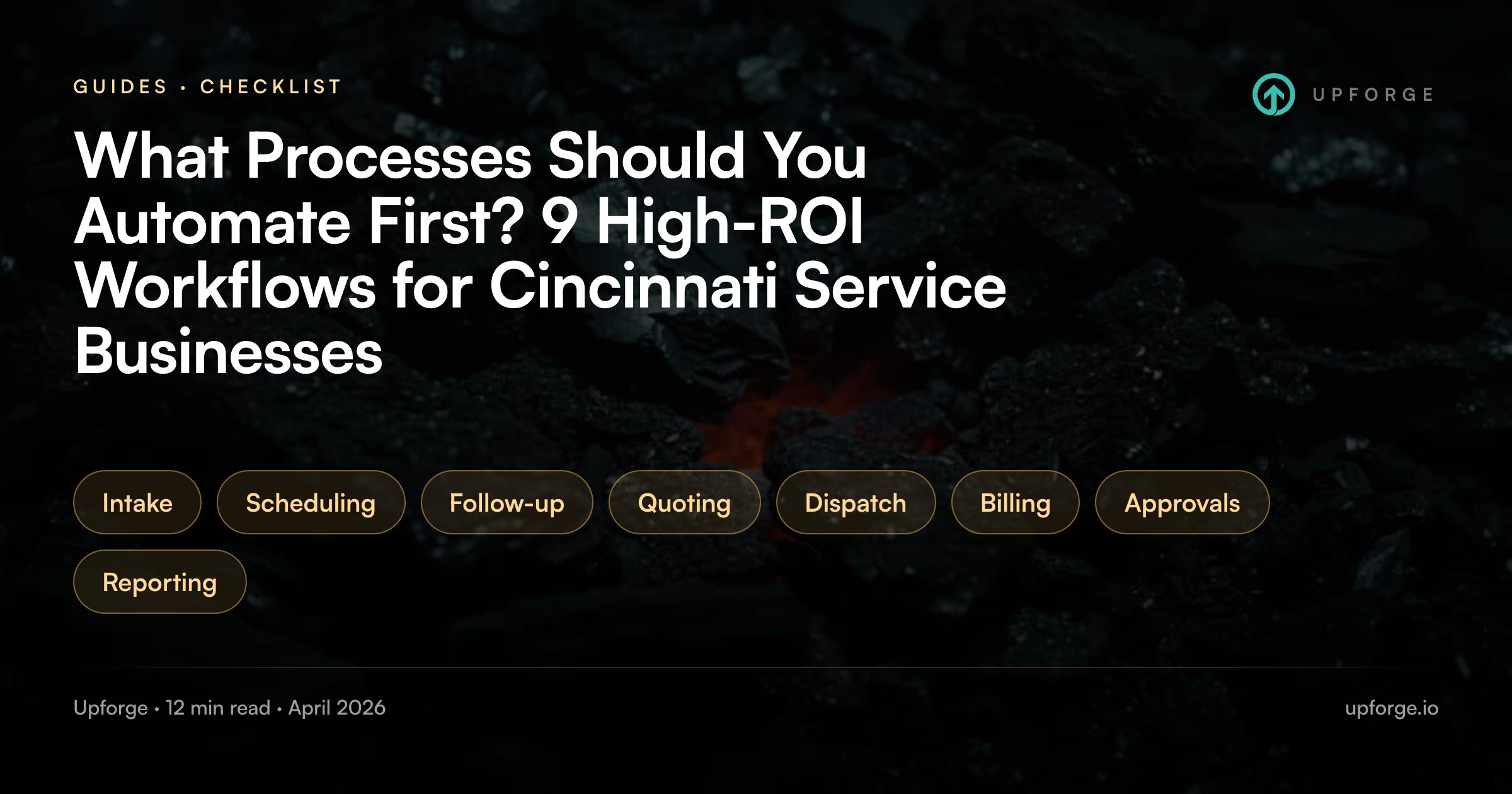
For most Cincinnati and Northern Kentucky service businesses, the highest-ROI first automation projects are intake, scheduling, follow-up, quoting, document collection, dispatch, billing, approvals, and reporting. A workflow that saves 15 minutes across 40 weekly instances returns 10 staff hours per week.
13 min read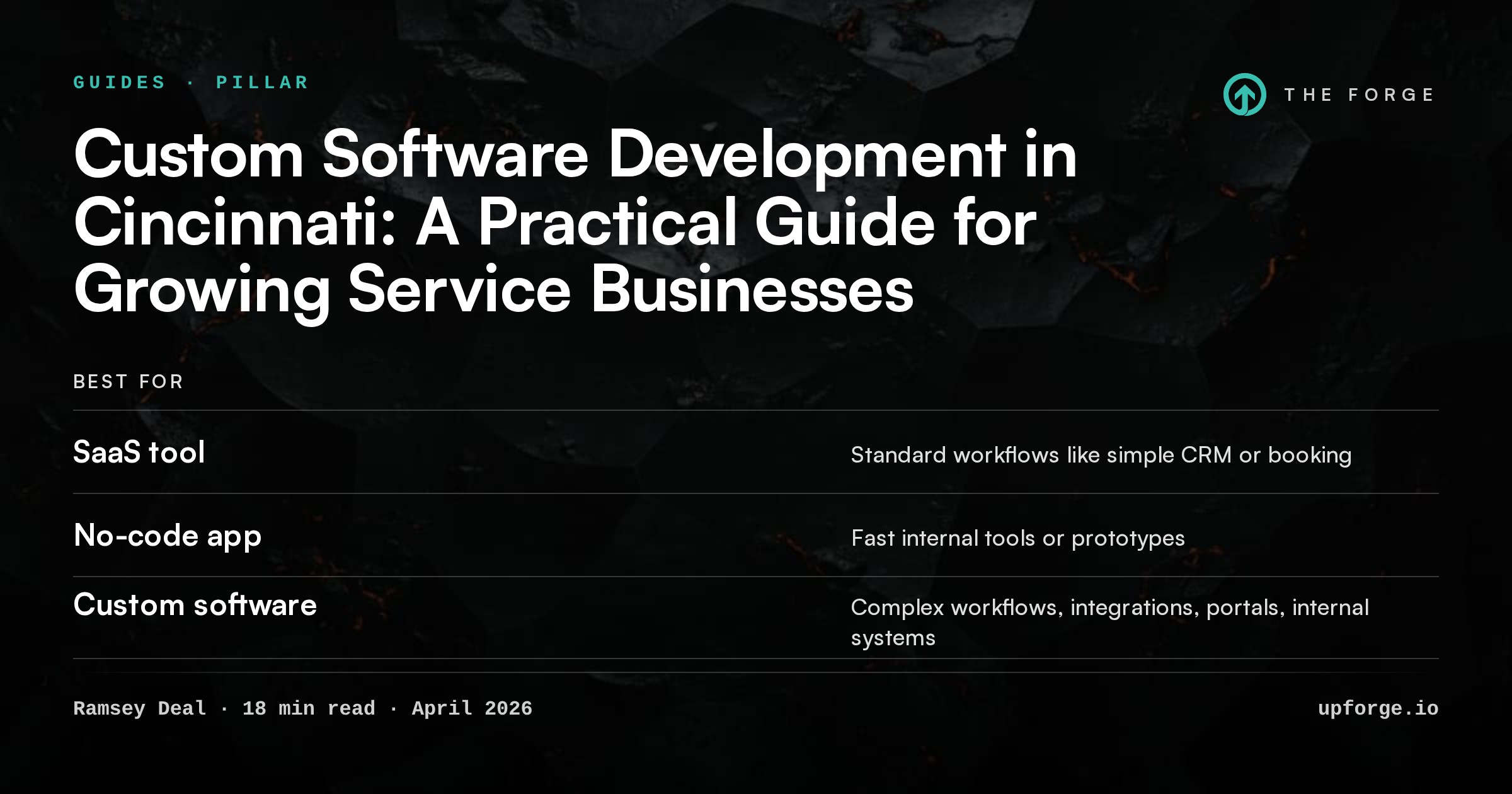
For growing service businesses in Greater Cincinnati and Northern Kentucky, custom software usually makes sense when 3 to 5 people are touching the same workflow, data is being re-entered in 2 or more systems, and a focused first release can often be launched in 6 to 14 weeks. Phase-one budgets run $5,000 to $50,000, and most land between $18,000 and $35,000.
18 min read
Upforge’s custom software development process typically moves through 5 stages: discovery, scope, build, launch, and post-launch support, with many phase-one projects landing in a 7 to 18 week timeline depending on integrations and workflow complexity.
12 min read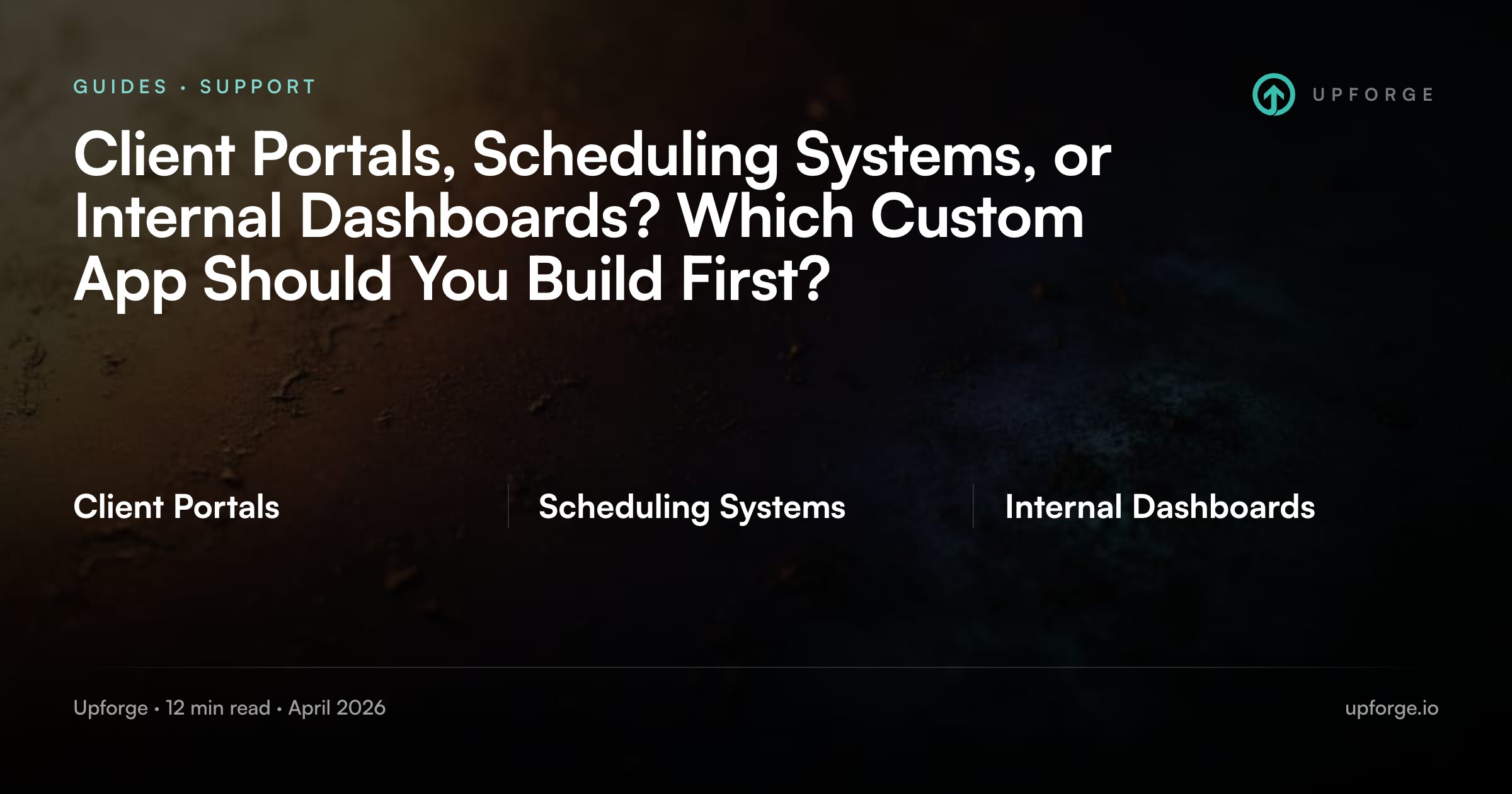
The best first custom app for a service business depends on where friction lives: client portals fit repetitive customer requests and document exchange, scheduling systems fit booking and dispatch bottlenecks, and internal dashboards fit visibility gaps. A strong phase-one build should target 1 core workflow, 1 primary user group, and 1 measurable outcome within about 90 days of launch.
13 min read
For Cincinnati and Northern Kentucky service businesses, custom software often becomes the better investment when 3 or more systems must share data and recurring inefficiency costs exceed roughly $30,000 per year, even if SaaS is cheaper upfront.
13 min read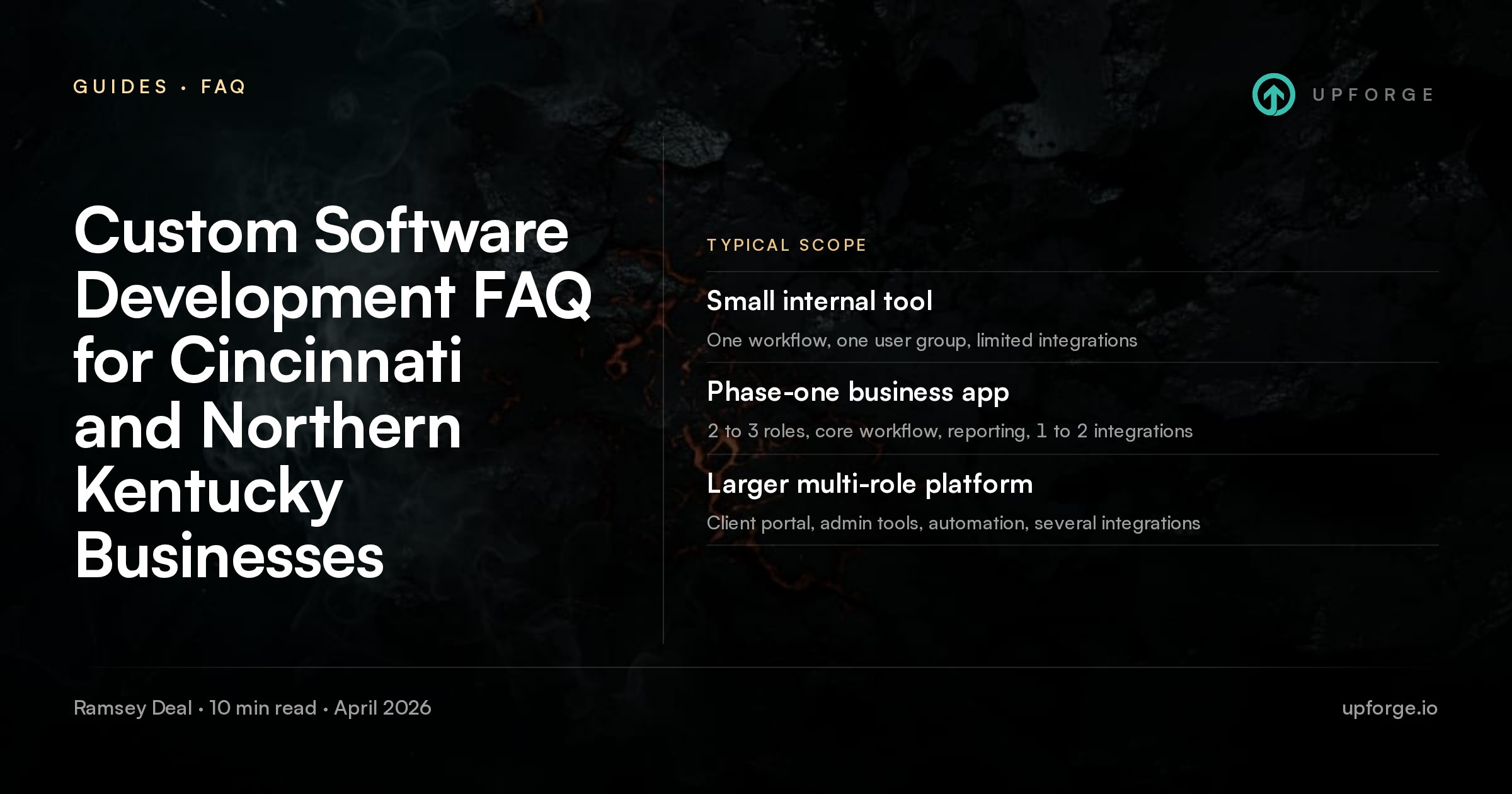
This custom software development FAQ explains that most Cincinnati and Northern Kentucky service businesses should start with a focused phase-one build, often covering 1 core workflow and launching in roughly 4 to 16 weeks depending on scope and integrations.
10 min read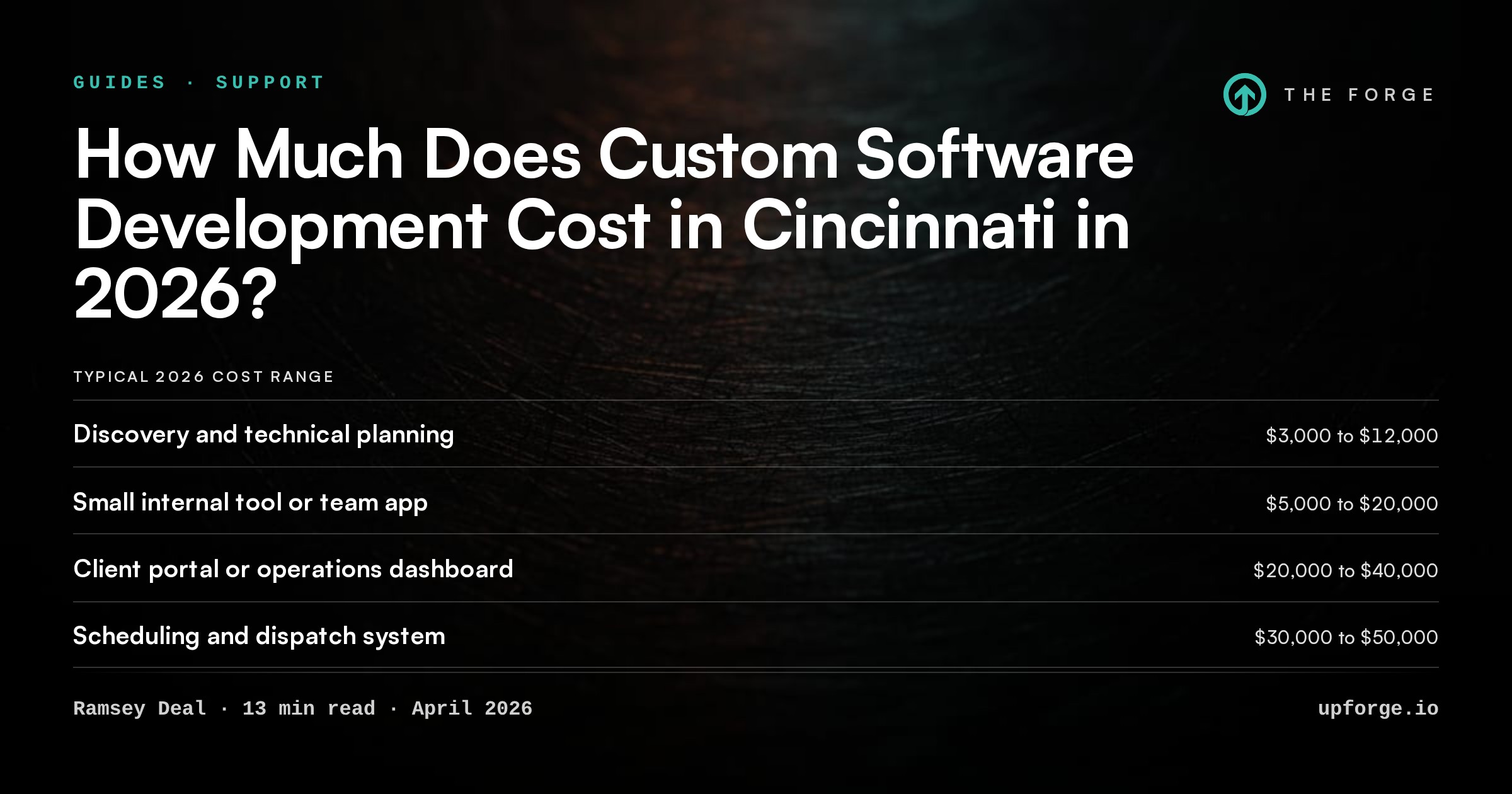
In Cincinnati and Northern Kentucky, a practical phase-one custom software build costs $5,000 to $50,000 in 2026, and most land between $18,000 and $35,000. Integrations, permissions, reporting, compliance, and post-launch support are the main factors that increase total cost.
13 min read
For Cincinnati service businesses evaluating in-house vs agency software development, an agency often reduces execution risk because one project may require 5 or more disciplines, while the 2024 U.S. median pay for a software developer alone was $133,080 before added overhead.
13 min read
Custom software can usually integrate with QuickBooks, HubSpot, and Jobber through APIs, webhooks, and middleware, and many service businesses get the best ROI by connecting 1 to 3 critical workflows first instead of replacing every system at once.
11 min read
A custom software ROI model should include labor savings, error reduction, revenue lift, and ongoing costs. For example, saving 20 hours per week at a loaded labor cost of $35 per hour equals $36,400 in annual savings before counting errors or recovered leads.
12 min read
Slow pages, risky plugin updates, and campaigns stuck in a developer queue. Seven signs your Cincinnati business has outgrown WordPress, and what to do next.
9 min read
A durable SaaS MVP costs $15,000 to $50,000 in the builds we scope. The real number depends on your feature scope, team type, and timeline. Here's a practical breakdown of what drives the price and how to budget smart.
9 min read