
01

Built for E-commerce

You outgrew your template. Now what?

We build custom storefronts, headless commerce platforms, and subscription systems for brands that need more than Shopify can offer. That includes ERP integration, inventory sync, and a frontend you actually own. Server-rendered Next.js pages with Sanity or Contentful CMS give your marketing team full control of content without slowing the site down.
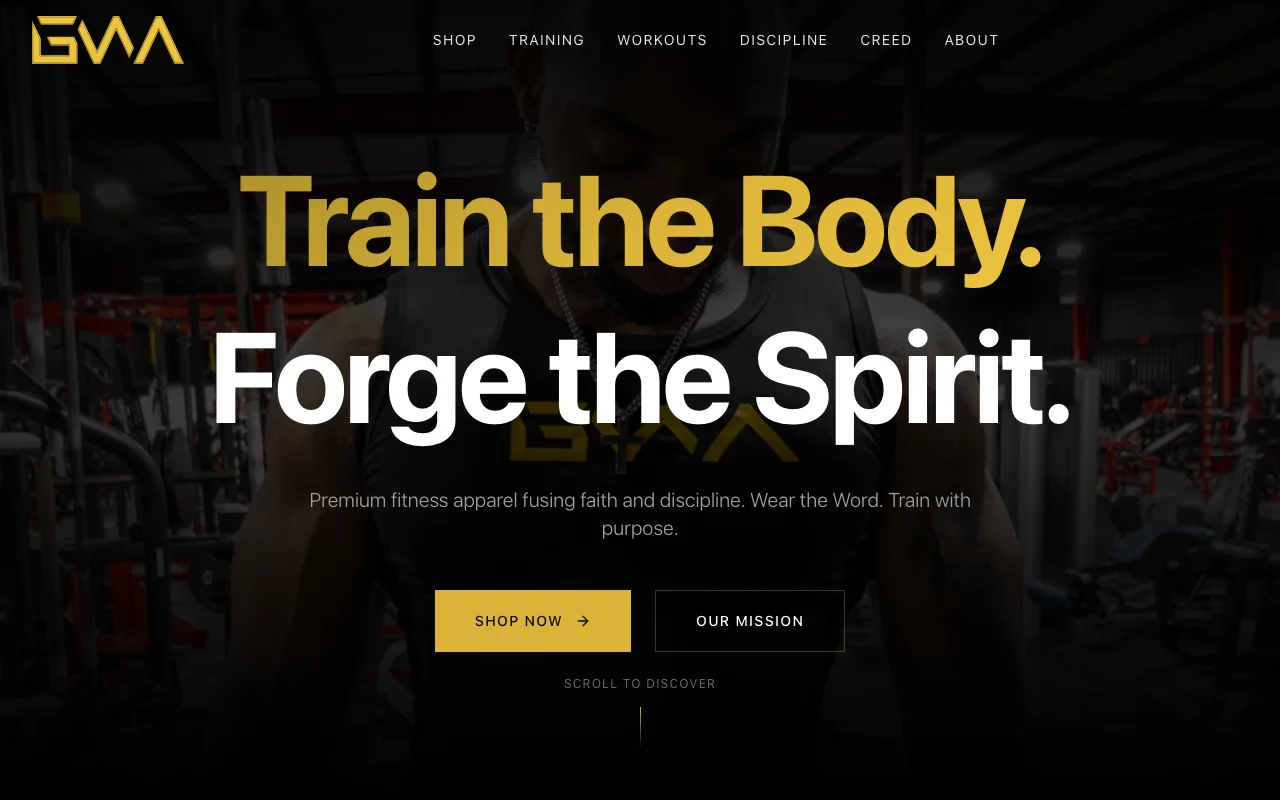
godsworkoutapparel.com

Our work · God's Workout Apparel, built by Upforge

Scraped, abraded steel throwing sparks, like the friction between product page and checkout that a custom e-commerce storefront removes
02Sound familiar?

Why growing brands hit a ceiling

6+

apps on the average Shopify store, and the count climbs with scale

Shopify's own data puts the average store at six apps; StoreInspect's 2026 crawl of 340,000+ live stores shows app count rising steadily as stores grow. Every added app is a fee, a script, and a point of failure your custom build wouldn't have. (StoreInspect, 2026)

70.22%

of online shopping carts are abandoned before checkout

Baymard Institute's aggregate across 50 studies. Most of that loss is friction you can engineer away, not shoppers who were never going to buy. (Baymard Institute, 2025)

+35%

conversion available from better checkout design alone

Baymard's checkout usability research finds the average large e-commerce site leaves a 35.26% conversion-rate improvement on the table in checkout UX, before anyone touches ads or traffic. (Baymard Institute, 2025)

03The shift

The same e-commerce business. A different machine.

Shift 01

Today

Shopify templates and plugin patchwork

With Upforge

A custom storefront built for your brand and workflow

Shift 02

Today

Manual inventory sync between systems

With Upforge

Automated ERP, fulfillment, and accounting integration

Shift 03

Today

Subscription and B2B pricing hacked together with apps

With Upforge

Native subscription billing and custom pricing logic

04What we build

Built for how e-commerce actually works.

01

Custom Storefronts

React/Next.js storefronts built to your exact design and UX, on a headless CMS and a commerce API. We build server-rendered product pages that load in under a second, with full SEO markup included. Product filtering, search, and collection pages are designed around your catalog structure. Your marketing team manages content in Sanity or Contentful while the storefront stays fast and on-brand.

Learn more about Custom Storefronts
02

Subscription & Membership

Recurring billing, dunning, upgrades, and customer portals, on Stripe or custom payment processing, built into the store instead of added as a Shopify plugin. Our subscription flows handle free trials, plan upgrades, proration, and failed payment recovery automatically. Subscribers manage their plans, update payment methods, and view order history in a self-service portal. Dunning sequences recover failed charges before those customers churn.

Learn more about Subscription & Membership
03

Integrations & Automation

We connect your ERP, fulfillment, and accounting systems, with automated order routing, inventory sync, and reporting. Our middleware keeps NetSuite, ShipStation, QuickBooks, and your warehouse management system in sync in real time. Routing rules send each shipment to the right fulfillment center based on location and inventory. Automated reporting pulls sales, returns, and inventory data into dashboards your ops team actually uses.

Learn more about Integrations & Automation
Free e-commerce audit

Want to know what your current setup is costing you?

The free audit checks your website the way your e-commerce customers experience it (speed, mobile, accessibility, and search visibility) and puts what's worth fixing in writing. It's automated and free, and the report is specific about what it finds.

06What changes

How the machine removes each problem.

01

Page performance

Compare the same pages and devices before and after the build.

02

Brand control

Design the shopping experience around your products and brand.

03

Integrations and fees

Identify required services and their recurring costs in the proposal.

04

Checkout conversion

Measure product views, checkout starts and completed purchases.

E-commerce FAQs

Common Questions From E-commerce

When you need custom checkout logic, B2B pricing tiers, subscription models, or ERP integrations that Shopify apps can't handle cleanly. If you're spending $2K+ per month on plugins, fighting checkout limitations, or dealing with 3-second page loads from script bloat, it's time. Most brands doing $500K+ in annual revenue see ROI within 6 months of migrating. See our e-commerce development page.

Typically Next.js for server-rendered, SEO-friendly storefronts, a headless CMS like Sanity or Contentful for content management, and a commerce API such as the Shopify Storefront API, Medusa, or a fully custom backend. Stripe handles payments. You get sub-second page loads, full design control, and no plugin dependencies. See our e-commerce development page for details.

Yes. We migrate product data, customer accounts, order history, and subscription records while mapping every URL to preserve your SEO rankings with proper 301 redirects. We run the old and new storefronts in parallel during the transition so there's zero downtime or lost orders. Complex catalogs with thousands of SKUs and custom attributes are handled systematically. Our CMS migration process covers the details.

We integrate with Stripe Billing or build fully custom subscription logic depending on your needs. That includes recurring charges, automated dunning sequences for failed payments, plan upgrades with proration, and self-service customer portals where subscribers manage their account. Free trials, usage-based metering, and hybrid billing models are all supported natively without third-party plugins. See our application development services.

Yes. We design the UX and build the brand identity alongside the storefront as a single integrated project. Product pages, collection layouts, checkout flows, and post-purchase experiences are all designed around your specific catalog and customer journey. Every pixel reflects your brand instead of a template with your logo swapped in.

Our e-commerce builds run $10,000 to $50,000 depending on catalog size, integration complexity, and custom features like subscriptions or B2B pricing. A Shopify or headless WooCommerce storefront runs $10,000 to $20,000, a high-volume build runs $15,000 to $30,000, and a fully custom storefront with ERP sync, subscription billing, and multi-currency support runs $25,000 to $50,000. See our e-commerce development page for details.

We use Stripe or your preferred payment processor with payment fields or checkout pages the processor hosts, so card numbers go straight to them and never touch your server. All data transmits over encrypted connections. That keeps card data out of your storefront and reduces how much of PCI DSS applies to you. It doesn't remove your obligations: PCI compliance is shared between the processor and the merchant, and you still complete an annual self-assessment questionnaire and attestation. Your processor's guidance tells you which questionnaire your setup requires. See our application development security standards.

We provide ongoing support covering performance monitoring, conversion optimization, feature additions, and security patches. E-commerce sites need active maintenance as payment processors update, APIs change, and traffic patterns shift. It runs on a retainer: you put down a deposit, the work is billed against it at $150 an hour, and you get a monthly summary.

A focused storefront migration is typically 10-14 weeks including data transfer, SEO redirect mapping, and testing. Complex catalogs with thousands of SKUs, custom attributes, and subscription data can extend to 16-20 weeks. We run the old and new storefronts in parallel during transition so there's zero downtime. See our migration process for details.

Yes. We build tiered pricing, volume discounts, net terms, purchase orders, and customer-specific catalogs natively, and you don't need a Shopify Plus subscription or a third-party B2B plugin. Your wholesale and DTC channels can run from the same platform with separate pricing logic and checkout flows. See our application development page.

E-commerce: key facts (with sources)

  • 6+ apps on the average Shopify store, and the count climbs with scale (source: StoreInspect, 2026)
  • 70.22% of online shopping carts are abandoned before checkout (source: Baymard Institute, 2025)
  • +35% conversion available from better checkout design alone (source: Baymard Institute, 2025)

Sources

Each source opened and verified · last checked
  1. · In a March 2026 analysis of 340,557 live Shopify stores, app count rose with scale: stores under 50K monthly visitors averaged 1.8 client-side apps while stores above 1M visitors averaged 7.3, and 8.7% of stores ran duplicate apps in the same category.
  2. · The average documented online shopping cart abandonment rate is 70.22%, calculated by Baymard Institute across 50 studies of e-commerce cart abandonment.
  3. · Large e-commerce sites can increase conversion by 35.26% through better checkout design alone; the average US checkout shows 23.48 form elements.

Your e-commerce business, running on your terms.

Tell us where the hours are going, and we’ll show you what a system built for your operation looks like, with a fixed price before any work starts.